
Episode 65: Graeme Miles on Apollonius of Tyana
Apollonius of Tyana was a first-century wandering philosopher-sage, famous in later tradition as a great Pythagorean and wonder-working holy man. We look at the man himself and at his powerful myth.
Apollonius of Tyana was a first-century wandering philosopher-sage, famous in later tradition as a great Pythagorean and wonder-working holy man. We look at the man himself and at his powerful myth.

We continue our conversation with Dylan Burns, exploring the contours of Platonist esotericism from a number of different angles.
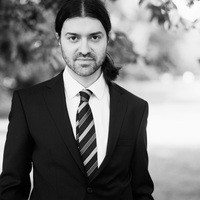
Building on our previous episode, where we introduced 'Middle Platonism', in this interview we investigate the middle Platonist 'Underworld', religio-philosophical texts of antiquity which became mainstays of later western esoteric traditions: the Chaldæan Oracles, the Hermetica, and the Gnostic tractates.

We continue our conversation with Professor Dillon, exploring the contours of the Middle Platonist traditions in more detail, not excluding its esoteric 'underworld'.
Under the expert guidance of Professor John Dillon, we begin our exploration of what may be antiquity’s single most crucial current for the development of western esotericism: Middle Platonism.

Justin Rogers guides us on a tour of the afterlife of Philo's work. How did the great Hellenistic Jewish thinker become a father of the Christian faith (and of Christian esoteric scriptural hermeneutics in particular)? We find out.

The Jews in antiquity were busy doing rituals of all sorts, many of which scholars want to call magical. They were also seen by their neighbours as especially skilled at various ritual arts which the neighbours called magical. Naomi Janowitz discusses Jewish magic and the ‘Jewish Magi’ in antiquity.

Frances Flannery explores the problems of interpreting ancient accounts of visionary dreams. A wide-ranging interview featuring the first Book of Enoch, imaginal trees, and the platypus.
In an interview bringing together both the visionary narratives of apocalyptic and the practical side of the Hekhalot traditions, Professor Frances Flannery leads us through the corridors of dreaming and the esoteric in antique Judaism.

We explore the fascinating parallels between Near Eastern visionary materials and the Jewish apocalyptic texts of the Second Temple. Matthew Neujahr is our guide through the shifting sands of some seriously esoteric texts, as we sift what can be proven from the speculative material.

In this episode Professor John J. Collins introduces a fascinating product of Second Temple Judaism, and a fertile vehicle for esoteric speculation beyond the bounds of Jewry – apocalyptic literature. All will be revealed!

We continue our conversation with Joel Kalvesmaki on all manner of subjects numerical, psephical, arithmological, metaphysical, Christological, monadical, and even heretical.

Whenever anyone does something other than arithmetic with numbers, the name Pythagoras tends to crop up. Exactly how this strange situation came about is a fascinating story, and Dr Kalvesmaki has done groundbreaking work on the subject. This episode is a superb introduction to the origins of ‘gematria’ and arithmology.

In this special episode we discuss the Stoic idea of fate in its several dimensions, and the Stoicism Today project, bringing practical Stoicism back in the twenty-first century.

Strangely enough, one of the least 'esoteric' schools of antique philosophy, the Stoics, had a profound influence on a number of aspects of western esotericism. In this episode we learn the basics of what they were about from an expert.

Historical discussions often fail to help us 'get inside' the subject we are looking at. In this episode we talk to Chris Brennan, Hellenistic astrologer and historian, for some theoretical and practical light on the realities of ancient astrology.

Professor Adamson enters the speculative realm at the edges of Platonic interpretation, addressing issues ranging from the rise of the ineffable in late antique Platonism to the status of the giraffe in Plato's thought.
We discuss Plato with Peter Adamson, Professor of Philosophy at the LMU in Munich and presenter of the History of Philosophy Podcast, asking the question: how can the Plato of analytic philosophy be the same man as the esoteric Plato?

We return to the mathematical structures within the text of Plato’s masterwork, guided by a scholar who has looked deeply into the question. Maya Alapin discusses how harmonic theory, music, ratios and proportions intertwine with textual meaning in the Republic.

In a conversation ranging from neolithic Scotland to avant-garde Europe in the 1920s, with many stops along the way , geometer and philosopher Adam Tetlow discusses some of the crucial, and oft-ignored, arithmetical and geometrical concepts from Plato’s dialogues.
All text and podcast content is licensed under a
Creative Commons Attribution-NonCommercial 4.0 International License

It looks like you haven't added any items to your cart yet.
Visit the SHWEP shop