Storytime: Reading the Solomonic Hygromanteia, Part III
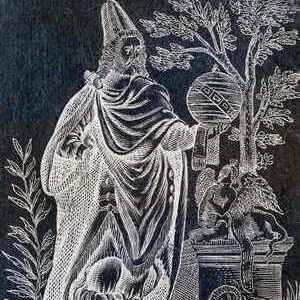
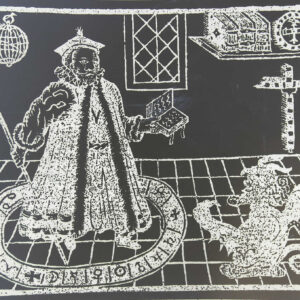
In our final episode on the Solomonic Hygromanteia we get to where the action is: it's time to conjure up a demonic host. Featuring an unexpected cameo appearance from the kabbalistic sephirot!
We read through Solomon's magical recipe book in BL MS Harleianus 5596. This is spirit-summoning as metier.
In a three-part episode, we explore the family of Solomonic addressative texts known as the Hygromanteia. In Part I we look at the range of MSS and scholarship and the Solomonic tradition which provides the context for this extraordinary manual for angelic and demonic manipulation.
We explore the East Roman folk-astrological and angel-magic traditions through the book known as The Book of Wisdom and of the Science of Talismans of Apollonios of Tyana. Featuring a cameo appearance from Adam, the father of mankind.
Looking through the lens provided by three central figures of the western esoteric tradition -- Hermes Trismegistus, Apollonios of Tyana, and King Solomon -- we discuss three important East Roman magical books whose influence echoes from the end of late antiquity until the present day.
We explore the tragic dénouement of Julian's reign and the rôle played therein by Maximus of Ephesus. Along the way we see a transfer of power to the Valentinianic dynasty, a ferocious political purge of suspected magicians and diviners, and learn of Maximus' final fate. We also get two descriptions of ancient, private divination-practices in action, but only one of them is something to try at home!
As we near the end of our Julian and his Amazing Friends series, we dive back into the text of Eunapius of Sardis to excavate Maximus of Ephesus, the wonder-worker who became Julian's closest friend and advisor. What happens when the Roman empire is guided by the insights of a theurgist, his gods, and the stars? We find out in this episode.
We discuss Sosipatra of Pergamum, an otherwise-unknown late polytheist holy woman and philosopher, depicted by her biographer Eunapius as a living goddess as well as a philosophic teacher in the lineage of Iamblichus. Come for the Late Platonist resistance to Christianity in the fourth century, stay for the mysterious Chaldæan strangers.
In this, our last Zosimus Storytime episode, we discuss the ‘Final Accounting’ or ‘Final Quittance’, a work in which Zosimus lays out for Theosebia the most recondite and hardcore spiritual practice to be found in his oeuvre. Part Hermetic, part demonic, all alchemical.
We dive back into the dossier of late-antique magic with Joseph Sanzo, looking at the ways in which late-ancient religious communities used magic to define who they were and who they weren't.
With papyrologist Korshi Dosoo as our guide, we explore the world of first-millennium Christian magic as it is found in the papyrus-records, both published and unpublished. Along the way we learn more about Christianity than we expected.
We set the stage for an examination of early Christian magical traditions, starting from the authoritative writings of the church fathers, who deny that there is such a thing as Christian magic, and insist that polytheist religion is the real sorcery. Then it turns out that there is lots and lots of Christian magic from late antiquity.
We want to discuss the Testament of Solomon, an extraordinary demonological, angelogical, astrological, magical work from late antiquity. But we realise that, to get there, we need to spend some time exploring the earlier reaches of the ‘Solomonic tradition’. So we do. Come for the building of the First Temple, stay for the cloud upon the sanctuary.
We explore the earliest-known Jewish ‘magic book’, the Sefer ha-Razim or Book of Mysteries. Angel-magic meets addressative practices aimed at old friends like Helios and Hermes, while Hellenistic astral cosmology collides with fiery heavenly palace-firmaments of the apocalyptic and Hekhalotic stamp.
We turn from the far-eastern, Jewish magic of the incantation-bowls to the far-western, polytheist magic of the Roman ‘curse-tablets’. Expect intriguing similarities across cultural divides, along with important differences. Featuring the Great Mother goddess, Isis, and a number of supporting players.
We explore a few minority cases among the incantation bowls: the aggressive use of a bowl to curse an enemy, and the iconography (mostly demonic) which we find in some bowls. Come for the demons, stay for the demonic chickens.
We dive more deeply into the enigmatic corpus of late-antique Jewish ‘incantation bowls’ from Mesopotamia with the help of researcher Daniel Waller. We discuss the bowls as material objects, functional technology, and their place in late-antique Jewish culture.
We explore the nitty-gritty of the ritual acts lying behind the theoretical discussions in the De mysteriis. Brian Alt is our guide on a journey through Iamblichean theurgy, its many parallels in Hermetica and ‘magical’ papyri from Egypt, and its echoes in earlier and later Platonism.
We discuss the phenomenology and meaning of theurgy with Professor Gregory Shaw, whose many publications on the Sage of Chalcis have helped to free his religious ideas from the opprobrium of a century of scholarship and reposition them where they belong: as spiritual practices of late-antique philosophy.
In a digression-filled survey, we attempt to give some idea of Porphyry's Letter to Anebo, of Iamblichus' responses to that Letter, and the general theological/practical approach found in the De mysteriis, antiquity's greatest philosophic manifesto for addressative ritual practice.