Storytime: Reading the Hermetic Kyranides, Part II
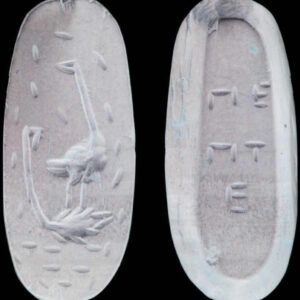
We try to explore the Kyranides at large, but end up digging into section ēta of Book I for an hour. We had no choice: there was a hoopoe.
We try to explore the Kyranides at large, but end up digging into section ēta of Book I for an hour. We had no choice: there was a hoopoe.

We begin our read-through, exploring the philosophic and religious cultures at Athens and Alexandria from the days of Hypatia down to the height of Proclus' career. Come for the prosopography of many extraordinary religious and philosophical characters of late antiquity, stay for Isidore's theurgic bird-imitations.

We begin to read through Macrobius' Commentary with an eye for the esoteric. A whole world of literary/discursive theory opens before our eyes, wherein fictions hide the truth, the truth may be ineffable, and dreams are a weird kind of esoteric text. So what does that make a fictional dream which tells the genuine truth?

We explore the rich seam of late-antique esoteric lore that is Macrobius' Commentary on the Dream of Scipio. We discuss who Macrobius was, what he wrote, what he wrote about, and introduce who read him later on. He emerges as a crucial transmitter of astrologised, arithmologically-informed Platonism to the Latin west in the middle ages.

The On Dreams of Synesius of Cyrene is one of the finest pieces of esoteric writing to survive from antiquity. It preserves fragments of the Chaldæan Oracles, conveys fully fleshed-out theories of veridical imagination, dream-divination, and magic based on kosmic correspondence, and gives us other valuable details of antique occult lore. It is also self-consciously an esoteric piece of writing, and seems to be suggesting that it is a polytheist message-in-a-bottle to be read by future generations, once the dark times of Christian persecution have passed. So we read it.

We dive into the fascinating life and thought of Synesius of Cyrene, Platonist philosopher and student of Hypatia of Alexandria, and Orthodox bishop of Ptolemaïs. Committed Christian or pagan bishop? We'll see ....

In this episode we look at the collection of short texts often called ‘The Visions of Zosimus’, hallucinatory dream-narratives which Zosimus relates and then interprets for us. This is the earliest extant visionary alchemical allegory, and it's serious stuff.
We continue our discussion of the great Zosimus, with anecdotes from the laboratory, discussion of the rhetorics of secrecy and the esoteric in Zosimus' works, and of Zosimus' Nachleben as one of the great alchemical authorities down the ages.

We discuss the life, work, and thought of Zosimus of Panopolis, greatest alchemist of late antiquity, with Professor Matteo Martelli. All is One!

We explore the wonderful world of late-antique (theurgic) Platonism through the eyes of Eunapius, second-rate Sophist and first-rate fabulist. Come for the divinations, prophecies, divine interventions, and grand narratives of kosmic decline, stay for the kung-fu.

Apuleius was a great Latin-language Middle Platonist writer, whose works preserve some fascinating esoteric materials which had a major impact on the development of western esotericism in the Latin middle ages and beyond. We introduce the man and his famous occult novel, the Metamorphoses, or Golden Ass.

We examine one of the strangest records of personal religious experience and divine epiphany from antiquity, the Hieroi Logoi of Ælius Aristides. Come for the incubation, dream-initiations, and miraculous powers, stay for the interminable descriptions of dyspepsia.

Further discussion of Artemidorus and his dream-divination in context and in practice. We talk about Artemidorus' relationship to other forms of divination, the political implications of dreams, and much more.
With an expert guide, we enter the labyrinth of second-century divinatory dream-interpretation. Artemidorus' Oneirocritica is the west's earliest surviving manual of dream-interpretation, and it's amazing.

In antiquity the gods sometimes communicated with mortals through dreams. But sometimes the gods can be fickle; in cases like this, you need to head to the sanctuary and go see the god at home. You need ritualised dreaming, or incubation.

We explore the Dream of Scipio, Cicero's cryptic work in which one Scipio appears to another Scipio in a dream and instructs him in astral religion, numerical/astrological cosmology, the fate of just souls in the astral afterlife, and much more. Not bad for a lawyer.

Frances Flannery explores the problems of interpreting ancient accounts of visionary dreams. A wide-ranging interview featuring the first Book of Enoch, imaginal trees, and the platypus.
In an interview bringing together both the visionary narratives of apocalyptic and the practical side of the Hekhalot traditions, Professor Frances Flannery leads us through the corridors of dreaming and the esoteric in antique Judaism.

Dreams are perhaps the most important point of access to the otherworlds, and everyone has them. But they are especially important for the history of western esotericism. In this episode we talk about dreams, their relation to myths, and ancient theories about dreaming.
All text and podcast content is licensed under a
Creative Commons Attribution-NonCommercial 4.0 International License

It looks like you haven't added any items to your cart yet.
Visit the SHWEP shop