Podcast episode
September 13, 2026
Episode 219: Into the Archives with Alicia Walker
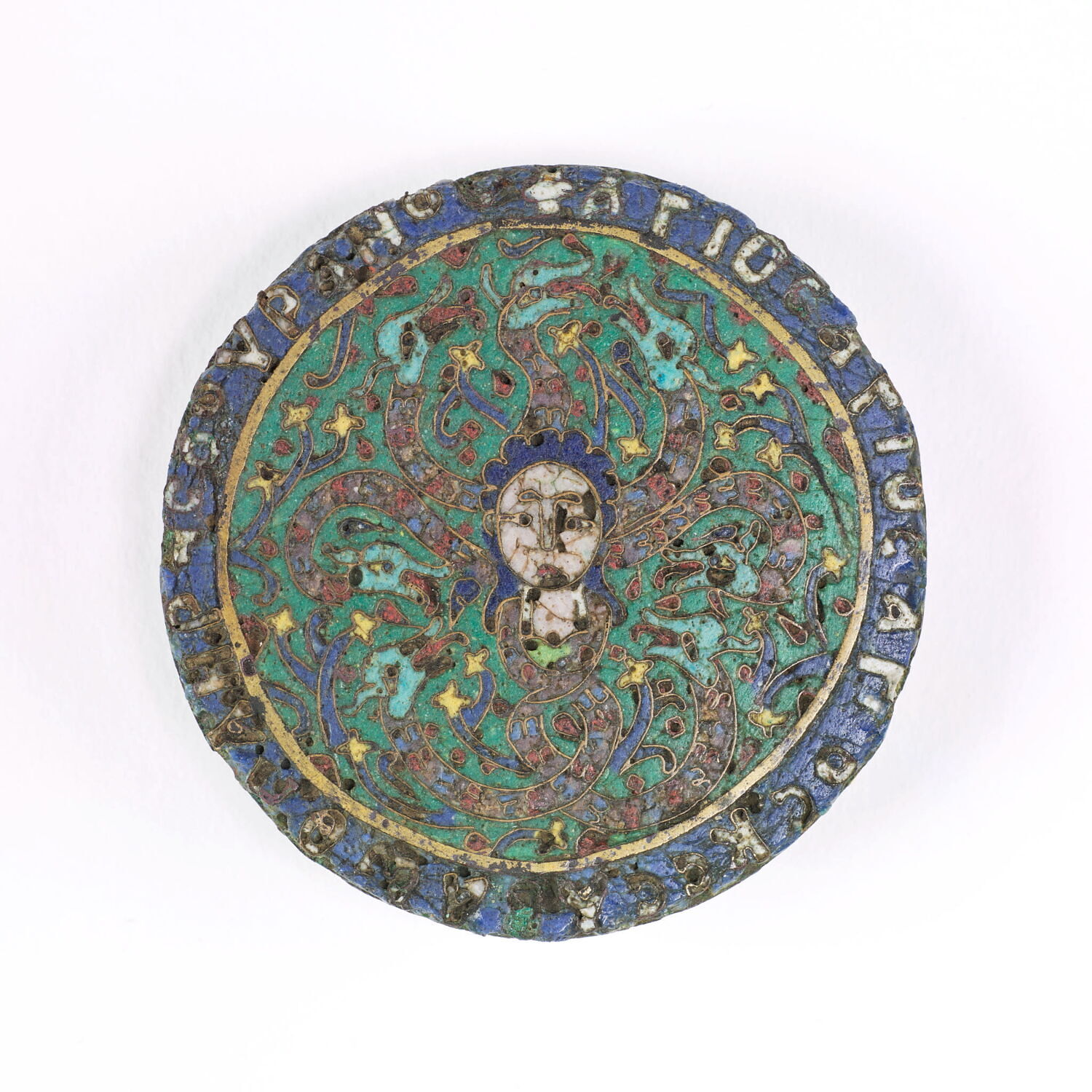
What kinds of materia magica do we find from East Rome, from the grand to the humble? The magical evidence from mediæval East Rome shews us a Christian cultural milieu in which, when you scratch the surface, you find ancient Egyptian monsters cohabiting with ninth-century saints, polytheist gods and goddesses inhabiting ambiguous positions in operative objects, and, in general, the type of magical culture appropriate to the vibrant melting pot of Hellenic, Christian, and Roman identities which made East Roman culture what it was.
This episode is special as it’s our first visual guided-tour, courtesy of Professor Walker. By all means have a listen to the audio link above if visual culture isn’t really your thing, but for the full experience, check out this audio stream with visual accompaniment:
Interview Bio:
Alicia Walker is Professor of the History of Art at Bryn Mawr College in Pennsylvania in the United States. Her first monograph, The Emperor and the World: Exotic Elements and the Imaging of Middle Byzantine Imperial Power, was published by Cambridge University Press in 2012. She is co-editor of the essay collections Negotiating Secular and Sacred in Medieval Art. Christian, Islamic, Buddhist (Ashgate, 2009) and Mechanisms of Exchange: Transmission, Scale, and Interaction in the Arts and Architecture of the Medieval Mediterranean, 1000-1500 (Brill, 2012). She has published essays on topics including medieval inter-cultural artistic transmission, the role of women in Byzantine art and culture, and the function and meaning of early Byzantine marriage jewelry. Her work has appeared in journals including Muqarnas, Gesta, Ars Orientalis, Studies in Iconography, The Medieval History Journal, and The Art Bulletin.
Works Cited in this Episode:
Our Episode 72 on Ælius Aristides can be found here.
Primary:
For some ancient examples of khnoubis-amuletry to contrast with the mediæval examples in the episode, check out the Campbell-Bonner database.
The woman with an issue of blood in the New Testament: Luke 8:43-48 (in the King James version: ‘And a woman having an issue of blood twelve years, which had spent all her living upon physicians, neither could be healed of any, came behind him, and touched the border of his garment: and immediately her issue of blood stanched. And Jesus said, Who touched me? When all denied, Peter and they that were with him said, Master, the multitude throng thee and press thee, and sayest thou, Who touched me? And Jesus said, Somebody hath touched me: for I perceive that virtue is gone out of me. And when the woman saw that she was not hid, she came trembling, and falling down before him, she declared unto him before all the people for what cause she had touched him, and how she was healed immediately. And he said unto her, Daughter, be of good comfort: thy faith hath made thee whole; go in peace’).
Lapis lazuli attracting Aphroditē in the Kyranides: Dimitris Kamakis, editor. Die Kyraniden. Number 76 in Beiträge zur klassischen Philologie.
Anton Hain, Meisenheim, 1976, p. 85 (I.18, 8).
Secondary:
On the ‘wealth-bearing figure’ in East Roman art: Eunice Dauterman Maguire, Henry P. Maguire, and Maggie J. Duncan-Flowers. Art and Holy Powers in the Early Christian House. University of Illinois Press, Urbana, IL, 1989, pp. 13–14.
Shannon Steiner’s 2020 thesis Byzantine Enamel and the Aesthetics of Technological Power, Ninth to Twelfth Centuries can be found online here.
Themes
Addressative Ritual, Alchemy, characteres, East Rome, Magic, Orthodoxy, Polytheism

Comments
Comments are open to SHWEP members only
Join now to comment
Already a member? Log in here