Podcast episode
August 25, 2026
Episode 218: Alicia Walker on Everyday Magical Culture in East Rome
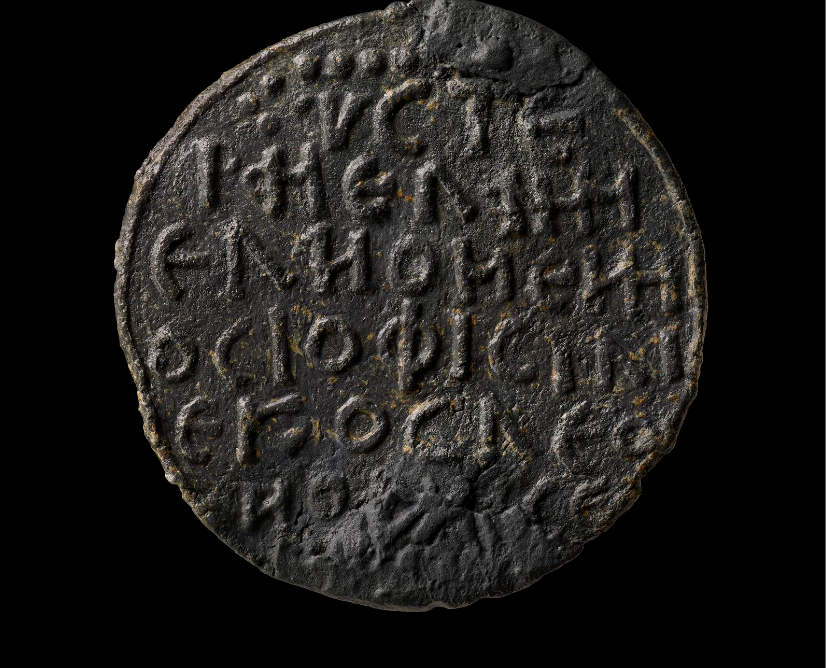
In Episode 217 we looked at three major works of magic from East Rome, book-learned texts with long traditions reaching back into late antiquity and attributed to prestigious names with a lot of esoteric (and non-Christian) gravitas attached to them: Hermes Trismegistos, Apollonios of Tyana, and King Solomon. In this episode we talk about the wider culture of Christian magic in East Rome, everything that isn’t to be found in that book-learned ‘high-magical’ tradition.
We are delighted to be joined by Alicia Walker, who knows a lot about this quotidian type of magic in the East-Roman world. We ask her a number of questions, including:
- What were East Roman anti-magical polemics like over time? How intertwined were they with other polemics, like anti-heretical, anti-Jewish, etc?
- How much do our secondary-term characterisations of magic, as scholars, overlap with East-Roman polemical definitions? What are the differences?
- What kinds of things are east Romans trying to do with magic? Is it exactly the same as for example when we discussed the PGM and broke down the different goals being aimed at, or have things changed now? Do we find evidence of erotic magic? Law-court magic? Has medical magic transformed significantly?
- Are there ‘witches’ in East Rome, and how dangerous are they understood to be?
- And more ….
Interview Bio:
Alicia Walker is Professor of the History of Art at Bryn Mawr College in Pennsylvania in the United States. Her first monograph, The Emperor and the World: Exotic Elements and the Imaging of Middle Byzantine Imperial Power, was published by Cambridge University Press in 2012. She is co-editor of the essay collections Negotiating Secular and Sacred in Medieval Art. Christian, Islamic, Buddhist (Ashgate, 2009) and Mechanisms of Exchange: Transmission, Scale, and Interaction in the Arts and Architecture of the Medieval Mediterranean, 1000-1500 (Brill, 2012). She has published essays on topics including medieval inter-cultural artistic transmission, the role of women in Byzantine art and culture, and the function and meaning of early Byzantine marriage jewelry. Her work has appeared in journals including Muqarnas, Gesta, Ars Orientalis, Studies in Iconography, The Medieval History Journal, and The Art Bulletin.
Works Cited in this Episode:
Primary:
John Chrysostom talks about different kinds of magic in different sources, always with disdain. Here is one example: John Chrysostom’s Homilies Against the Jews (Adversus Judaeos). J.-P. Migne’s Patrologia Graeca, vol. 48 (Paris, 1862), cols. 843-942, Homily 8, cols. 927-942.
Theodore Balsamon splits hairs over licit and illicit practices in the 13th century: in his commentary on the Quinisext Council, so he is discussing an earlier, late 7th century source.
Michæl Psellos makes certain comments about the Empress Zōē’s questionable practices: Reinsch, Diether Roderich, ed. Michaelis Pselli Chronographia, 2 vols, Millennium-Studien 51. (Berlin: De Gruyter, 2014), bk. VI, chs. 64-67. For Psellos on deisidaimonia (‘superstition’), usually focused on distinguishing between philosophy and educated investigation of science and (maybe a little of the) occult, on the one hand, and folksy, low-brow superstition, on the other: De Omnifaria Doctrina. Critical Text and Introduction, ed. L. G. Westerink ( J.L. Beijers, 1948).
Secondary:
Paul Magdalino. L’Orthodoxie des astrologues. La science entre le dogme et la divination à Byzance (VIIe-XIVe siècle). Number 12 in Réalités Byzantines. Lethielleux, Paris, 2006.
Themes
Addressative Ritual, Angelology, Demonology, East Rome, Greek Magical Papyri, Jews, Magic, Medicine, Michael Psellos, Testament of Solomon, Witches

Comments
Comments are open to SHWEP members only
Join now to comment
Already a member? Log in here