Podcast episode
September 18, 2026
Episode 220: Islām and Esotericism in the Eighth Century: The Umayyad Era and the Question of Islām as ‘Religion’
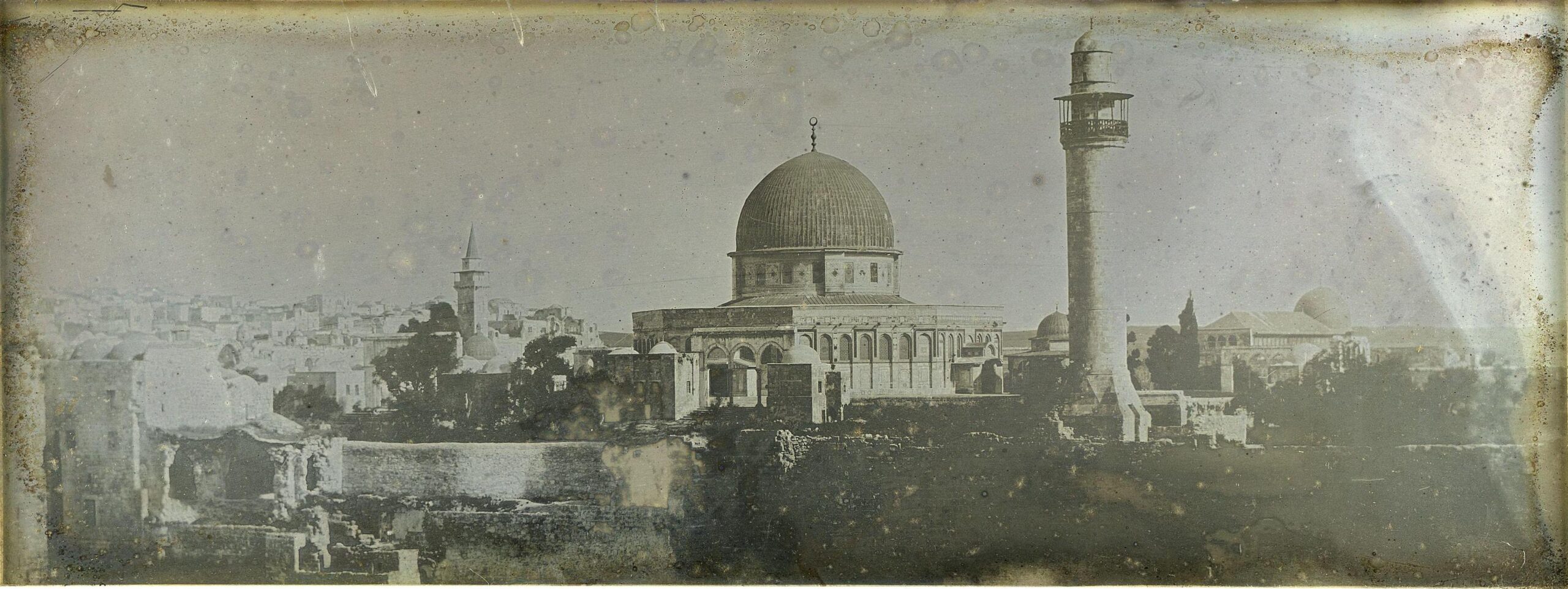
In this episode we try to do two main things.
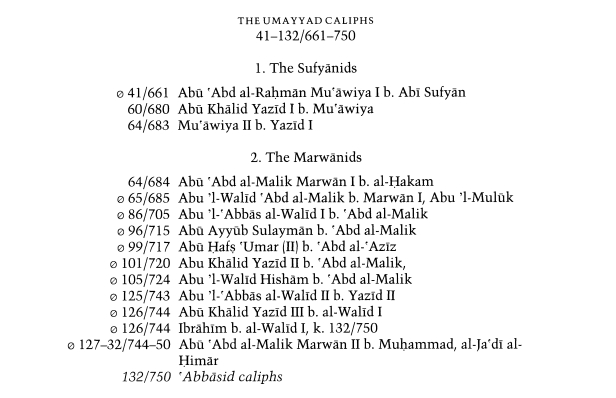
First of all, we identify some of the reasons why the Umayyad period (lasting from the years 41–132 of the hijrī calendar, or the second half of the seventh century and first half of the eighth CE) is important for the history of Islamic esotericism; coming episodes will explore these elements of the esoteric in detail.
Secondly, we open up some space in the ‘history of religions’ conceptual terrain, trying to see what scholars mean when they point to the reign of the Umayyad khalif ‘Abd al-Malik ibn Marwān as the time when the Believers’ movement first became ‘Islām’ in the full sense, and what all the discussion of sunnī and shī’ī ‘sects’ really means for this formative period.
Works Cited in this Episode:
Episode 154 with Paul Pasquesi.
Episode 165 with Joel Kalvesmaki on ‘Origenism’ and Evagrianism in the sixth century.
Primary (roughly in order of discussion):
The root S-L-M / سلم in the Qur’ān: https://www.islamiqate.com/4504/how-often-does-the-word-islam-appear-in-the-quran.
Coins of ‘Abd al-Malik: go to https://hcr.ashmus.ox.ac.uk/coin/, click on ‘search’, click on ‘reign’, click on ‘Abd al-Malik in the drop-down list, and hit `Search’.
Q 4:171: https://quran.com/an-nisa?startingVerse=171.
Al-Ṭabari on ‘Umar in Jerusalem: 2404–2409, citing the Leiden edition (Annales quos scripsit Abu Djafar Mohammed ibn Djarir at-Tabari. Brill, Leiden, 1836–1909).
Ibn Khaldūn on `Umar in Jerusalem: Tarikh Ibn Khaldun, 2/225.
Secondary:
Jonathan A. C. Brown. The Canonization of al-Bukhārī and Muslim. Brill, Leiden, 2007.
Patricia Crone. Ninth-Century Muslim Anarchists. Past and Present, (167):3–28, May 2000.
Fred M. Donner. Muhammad and the Believers: At the Origins of Islam. Harvard University Press, Cambridge, MA/London, 2010, quoting p. 211.
Heinz Halm. Die islamische Gnosis: Die extreme Schia und die ‘Alawiten. Artemis Verlag, Zürich/München, 1982, quoting p. 8: ‘So ist es denn nicht verwunderlich, daß es gerade der Irak war, wo der junge Islam mit gnostischen Lehren in Berühung kam und sich mit ihnen auseinandersetzen mußte.’
Robert Hoyland. In God’s Path. The Arab Conquests and the Creation of an Islamic Empire. Oxford University Press, Oxford/New York, NY, 2015, quoting p. 139.
Recommended Reading:
On the rise of Islām as an institutionalised religion in the Reign of ‘Abd al-Malik ibn Marwān:
Patricia Crone and Michael A. Cook. Hagarism: The Making of the Islamic World. The University Press, Cambridge, 1977, 8, 29, et passim [many of the claims made in this book are over-the-top, and I think both authors went on to disavow their early, enthusiastic revisionist project in various ways. That said, in my view at least their emphasis on the evidence from ‘Abd al-Malik ibn Marwān’s reign has stood the text of time].
Fred M. Donner. Muhammad and the Believers: At the Origins of Islam. Harvard University Press, Cambridge, MA/London, 2010, esp. Section 5, pp. 194 ad fin.
Robert Hoyland. In God’s Path. The Arab Conquests and the Creation of an Islamic Empire. Oxford University Press, Oxford/New York, NY, 2015, esp. 195–201.
John Wansbrough. The Sectarian Milieu: Content and Composition of Islamic Salvation History, volume 34 of London Oriental Series. The University Press, Oxford, 1978 [severely technical and bracingly sceptical of preconceived notions, this book strips away as many assumptions as possible from the question of how Islām became a religion with recognisable sects. Not for the faint-hearted; highly rewarding to the keen and sceptical reader (but you need to be sceptical of Wansbrough as well as of the sources)].
Themes
Esotericism for Safety, Gnosticism, Ḥasan of Baṣra, Islam, Islamic Esotericism, Late Antiquity, Manichæism, Shi‘ī Esotericism, Taṣawwuf, Zoroastrianism

Kenneth Meisner
September 20, 2026
Thank you as always for keeping this site going!
If I may ask, Brill has a reputation for quality, but also for disheartening prices. Are there other editions that might might be a reasonable second choice?
Again, my thanks!
Earl Fontainelle
September 21, 2026
Welllll, if Brill publishes a book, only they publish it, generally speaking. But I’m not sure why this point is being raised here, as I didn’t cite any Brill works for this episode! Generally-speaking academic books are way too expensive. If there is any way for you to access a university library, that’s the best bet. If not, there are, ahem, para-legal ways to obtain pdf files of scanned books online. Or so I have heard.
Claus Hollenberg
September 21, 2026
You did cite Brown’s “Canonization of al-Bukhārī and Muslim” as well as the multi-volume Leiden edition of Tabari’s Tārīkh al-Rusul wa al-Mulūk, both published by Brill. At least for the latter one, it can be legally obtained on archive.org if you search for “Annales at-Tabari”, though I don’t know which volume contains ‘Umar in Jerusalem. Regarding the even-more-multi-volume SUNY English translation, it is in vol. 12., The battle of al-Qādisiyyah and the conquest of Syria and Palestine : [A.D. 635 – 637, A.H. 14 – 15] / transl. and annot. by Yohanan Friedmann, Albany 1992, p. 189-199.
Earl Fontainelle
September 21, 2026
Ah, yes. Sorry, I was looking at Recommended, not Cited. And thanks for the references.
Kenneth Meisner
September 21, 2026
Thank you indeed, Mr Hollenberg! Very much obliged!
Kenneth Meisner
September 21, 2026
Thank you replying and for the note on Brill’s tendency to exclusive publications. Perhaps someday someone will give them a little competition.
Kenneth Meisner
September 20, 2026
P.S. Regarding this particular episode, I especially appreciate your calling attention to the bias and anachronism inherent in the phrase “orthodox Islam.” As I’ve read attributed to Mark Twain (Samuel Clemens), “use the right word, not its second cousin.”
My best!
Earl Fontainelle
September 21, 2026
Good old Mark Twain!