Storytime: Reading the Hermetic Kyranides, Part II
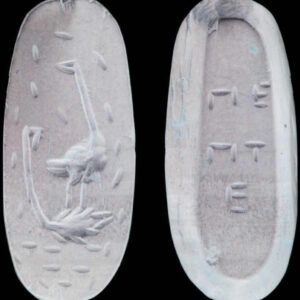
We try to explore the Kyranides at large, but end up digging into section ēta of Book I for an hour. We had no choice: there was a hoopoe.
We dive into the very complicated layering of texts which makes up the Kyranides, and explore the prologue, written by the unnamed East Roman compiler, which tells us a lot about the `authors' he compiled, and about why their work is esoteric. Featuring Hermes Trismegistos by way of Mesopotamia.
Looking through the lens provided by three central figures of the western esoteric tradition -- Hermes Trismegistus, Apollonios of Tyana, and King Solomon -- we discuss three important East Roman magical books whose influence echoes from the end of late antiquity until the present day.
We speak with Maria Papathanassiou about Stephanos of Alexandria: the last known Platonist/Aristotelean philosopher trained at Alexandria, a politically-connected courtier at Herakleios' Constantinople, a Christian, an astrologer, an alchemist, and more.
The On Dreams of Synesius of Cyrene is one of the finest pieces of esoteric writing to survive from antiquity. It preserves fragments of the Chaldæan Oracles, conveys fully fleshed-out theories of veridical imagination, dream-divination, and magic based on kosmic correspondence, and gives us other valuable details of antique occult lore. It is also self-consciously an esoteric piece of writing, and seems to be suggesting that it is a polytheist message-in-a-bottle to be read by future generations, once the dark times of Christian persecution have passed. So we read it.
Our discussion with Jeremy Swist on The Emperor turns metaphysical, theurgic, and religious, as we discuss Julian's incredible synthesis of Iamblichean theology and metaphysics, traditional religions, and politics. Come for the pagan counter-church, stay for the transcendent solar metaphysics.
We further explore the thought of Zosimus of Panopolis with Dr Bink Hallum, whose PhD research centred on the Arabic Zosimean corpus. We cover the basic (if confusing) textual situation, and then discuss astral influences, daimones and demons, mysterious talismans, Enochic ideas, and much more.
We discuss the life, work, and thought of Zosimus of Panopolis, greatest alchemist of late antiquity, with Professor Matteo Martelli. All is One!
We go through a number of case-studies of early Christian magic with Korshi Dosoo. Come for the queer Christian love-spell and unlooked-for cameo appearance by the Gnostic Barbelo, stay for the Satan-Unicorn.
We set the stage for an examination of early Christian magical traditions, starting from the authoritative writings of the church fathers, who deny that there is such a thing as Christian magic, and insist that polytheist religion is the real sorcery. Then it turns out that there is lots and lots of Christian magic from late antiquity.
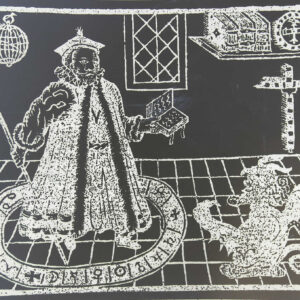
We explore the astral-demonic lore, the angelic medicine, and the many legendary stories recorded in the Testament of Solomon, and some of the manifold traditions which flow out from this legendary corpus. Come for the Testament, stay for the Pentagram!
We want to discuss the Testament of Solomon, an extraordinary demonological, angelogical, astrological, magical work from late antiquity. But we realise that, to get there, we need to spend some time exploring the earlier reaches of the ‘Solomonic tradition’. So we do. Come for the building of the First Temple, stay for the cloud upon the sanctuary.
A paper on the late-antique Platonist pneumatic soul-vehicle, delivered to an academic workshop on medieval Islamicate medicine. A typical Monday, in other words.
We discuss the soul-flight practices found in our testimonies to the ancient Greek iatromanteis, Middle-Platonist and other early testimony to the theory of a soul-vehicle, and the subtle-body theories of Plotinus and Porphyry.
We explore the evidence in the New Testament for accusations that Jesus was a magus or a sorcerer. Turns out there's quite a lot of them. What we are to make of these accusations, that's the question. We discuss ancient critics, Gospel apologists, and modern scholars.
We discuss Orpheus, Abaris the Hyperborean, Aristeas of Proconnesus, Epimenides of Crete, Hermotimus of Clazomenæ, Pythagoras, and Empedocles, the soul-manipulating healer-seers of ancient Greece. Come for the out-of-body soul-journeying, stay for the katabatic descents.
An introduction to the podcast, discussing briefly what we mean by ‘western esotericism’. This episode also answers the burning question, ‘What’s so “secret” about The Secret History of Western Esotericism Podcast?’ and features a short quiz to test your knowledge of western esoteric history.