Roots of Magic episode
November 1, 2025
Gideon Bohak on the Pishra de-Rabbi Ḥanina Ben Dosa
Roots of Magic Interview 7
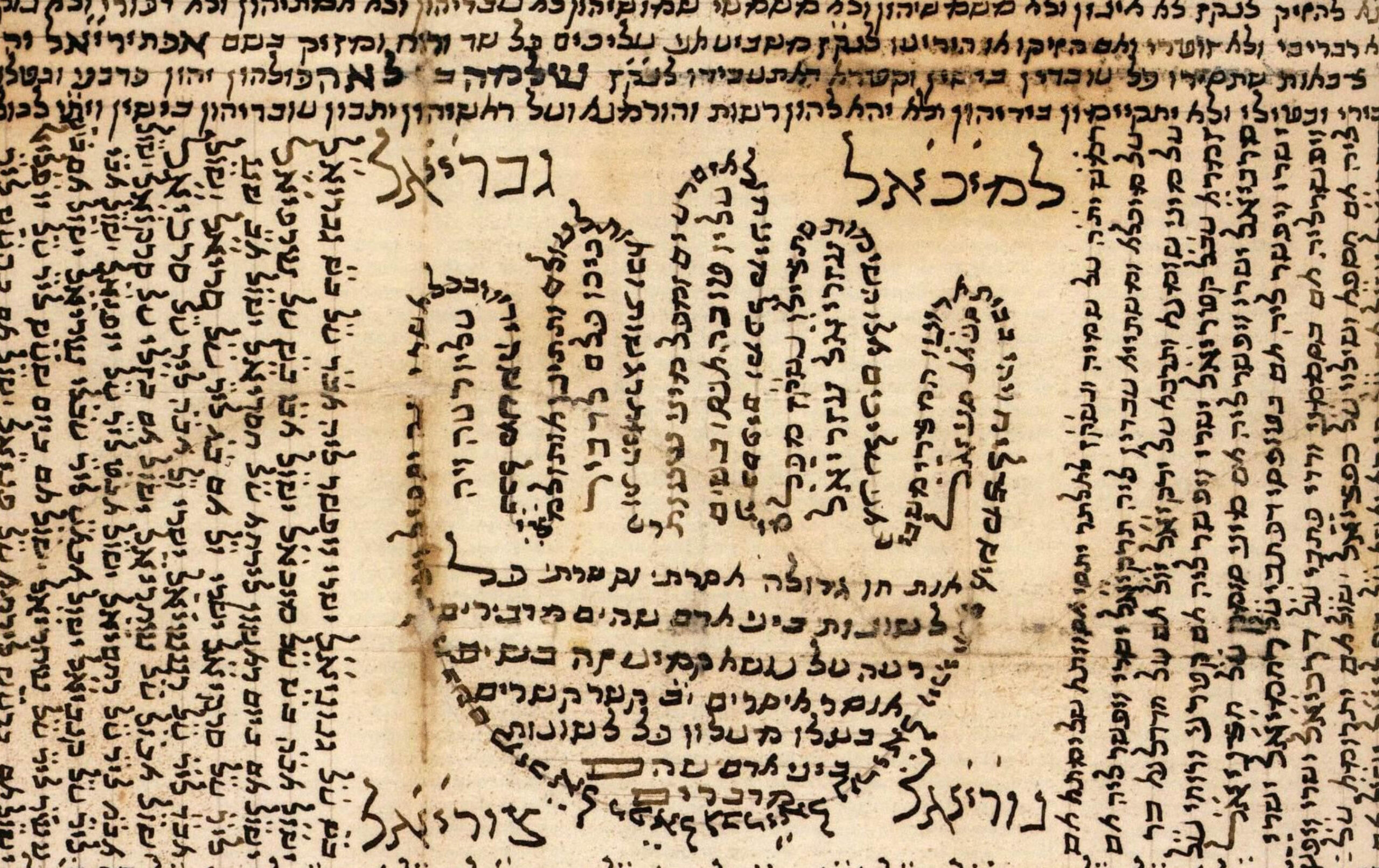
The Pishra of Rabbi Ḥanina ben Dosa is a relatively-concise work of all-round protective angel-magic, recently edited with an English translation and commentary by Ohad Abudraham and Gideon Bohak at the MagEIA centre. The text first appears up in the Cairo Genizah in MS fragments dating as early as the eleventh century, and was still being copied in amuletic form as late as the twentieth century (and very likely up to the present day). However, it has such strong parallels with the Babylonian Jewish incantation bowls of late antiquity that Abudraham and Bohak argue for an origin in late-antique Babylonia, perhaps even predating the Arab conquests.
We discuss the text and what it purports to be able to do, its likely place and time of origin, its intriguing relationships both with the much older Akkadian magical texts (many of which employ the analogous verb, PSHR, to indicate the magical act of ‘loosing’) and with late-antique contemporary traditions, Mandæic, Syriac, and more. A slew of random questions angelogical, astrological, vox-magical, and more finish out this fascinating interview. As always, Bohak delivers the goods.
 Interview Bio:
Gideon Bohak is Professor of Jewish Philosophy and Religious Studies at Tel Aviv. His work centres on the broad panoply of practices, artefacts, and texts relating to Jewish ‘magic’, particularly in late antiquity, and the list of his publications and edited volumes on the subject is awe-inspiring. He has recently co-edited, along with Dr Ohad Abudraham, also of Tel Aviv University, the first conspexus-edition with translation and commentary of the Pishra de-Rabbi Ḥanina Ben Dosa, to appear with Brill in 2026.
Works Cited in this Episode:
Bohak, Gideon and Abudraham, Ohad, ed. and trans. The Pishra de-Rabbi Ḥanina ben Dosa. Forthcoming, Brill 2026.
Michelini Tocci, Franco, Note e documenti di letterature religiosa e parareligiosa giudaica, in Annali dell’Istituto Universitario Orientale di Napoli 46 (1986), pp. 101–8.
Themes
Addressative Ritual, Angelology, Apotropaic Magic, Astrology, Curses, Demons, Interview, Judaism, Magic Bowls, Maqlu, Medicine, Monotheism, Rabbinic Judaism, Sasania, Second-Temple Judaism, Sefer ha-Razim, Testament of Solomon, voces magicæ, Witches


Kell Drinkwater
April 9, 2026
Interesting that both the Pishra and last episode’s Šurpu have this exhaustive, cover-all-bases nature. It reminds me of Bret Devereaux’s series on Roman polytheism, in which he quotes a Second Spring declaration that’s full of “if X or Y happens, it shall be accounted to be duly offered”. This despite it NOT being a litany for recitation.
Amusingly, this is an element that I think is NOT common in Neo-Pagan or New Age circles (though I’ve seen it from some historical reconstructionists). I think the idea is that the divine (a) can know your intent and (b) is not inclined to trap you in words – and that in modern New Agery, you can basically trace this back to Protestantism. I would therefore be very interested to know which parts of Christian magic are interested in covering all the bases, and which aren’t.