Podcast episode
November 20, 2026
Episode 224: Antoine Borrut on Astrological Historiography in the Umayyad Period
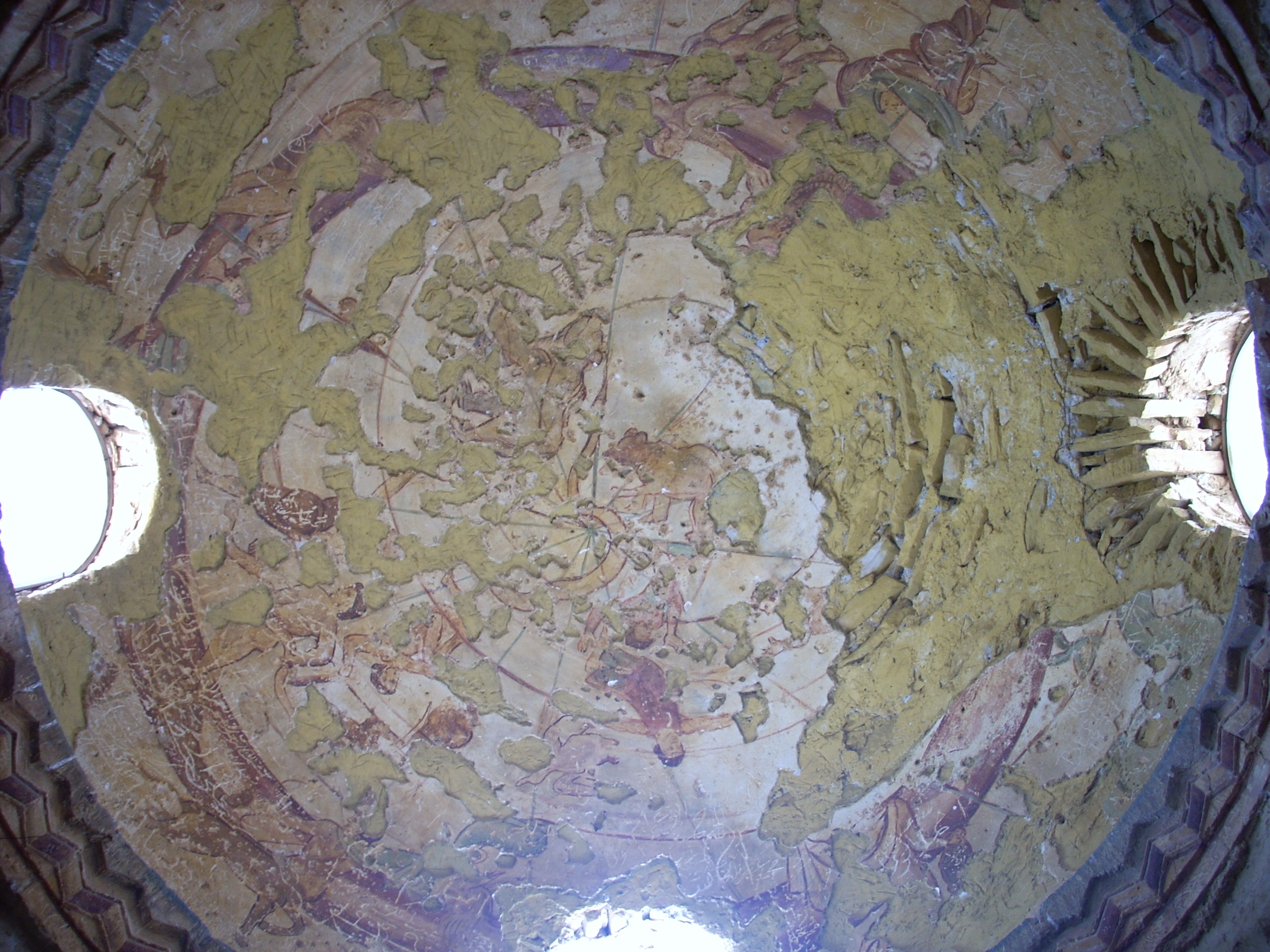
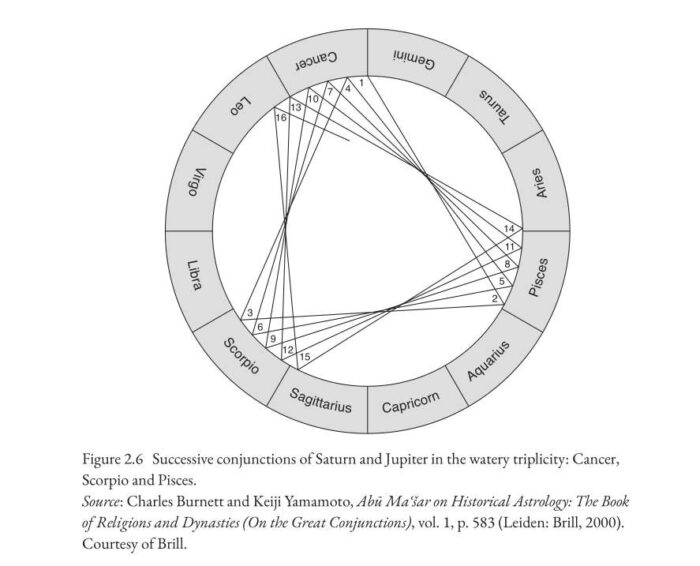
[Thanks for Matthew Melvin-Kushki for in-depth discussion of the Jupiter/Saturn conjunctions in theory and practice]
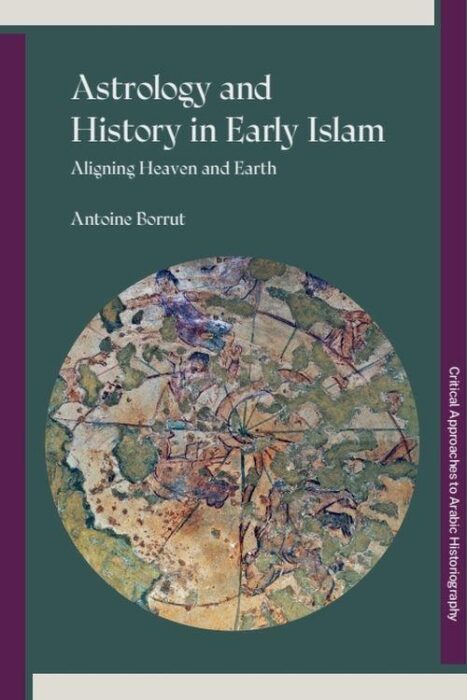 Antoine Borrut’s new book, Astrology and History in Early Islam: Aligning Heaven and Earth, makes strong claims for the continuity of the sciences (including especially astrology) in the Umayyad period, a time often too-easily dismissed as a `dark age’ for Islamic science, and argues for a now-lost genre of astrological histories from Umayyad times. In a wide-ranging interview, we confront this historiographical consensus on its own ground. Topics covered include:
- We discuss what scholars mean by an ‘astrological history’ as a genre,
- We make a short digression into current digital humanities, where we have a big project at the Paris Observatory aiming to digitise the many zīj-tables from the first millennium, giving modern scholars unprecedented abilities for dating horoscopes and so on,
- We discuss ‘cultures of expertise’ and the relevance of this anthropological notion for the cultural capital exercised by astrologers in the past (and by economists today!),
- The case-study of Khalid ibn Yāzid, an Umayyad prince known in narrative sources as an astrologer and alchemist, an alchemical poem attributed to whom, long assumed to be pseudepigraphic, has recently been reconsidered by George Saliba (2017) as possibly authentic,
- A cumulative case for the one-time existence of a now-mostly-lost genre of astrological histories produced under the Umayyads by a multilingual range of astral scientists,
- Including the increasingly-large body of evidence for pre-Islamic astrology in late-antique Arabia being brought to light by scholars like Ahmad al-Jallad of Ohio State University,
- [I insert an aside on Saturn-Jupiter conjunctions in Islamicate astrology],
- And an assessment of Borrut’s thesis that the disappearance of the astrological history was part of a broad move away from immanentist theories of the end of the world toward a more long-haul approach at the turn of the 3rd/9th and 4th/10th centuries. We ask whether this is pointing us in the direction of a cross-cultural move away from immanentism in eschatology.
Interview Bio:
Antoine Borrut is Associate Professor in History and Classics at the University of Maryland. He is the author of many studies of early Islamic intellectual history including, most recently, Astrology and History in Early Islam: Aligning Heaven and Earth (Edinburgh University Press, 2026).
Works Cited in this Episode:
Primary:
al-Sijzi: The Paris manuscript of al-Sijzī is freely available on the great Gallica here.
The Qusayr Amra bathhouse is amazing. Check out the wikipedia article here.
Secondary:
Ahmad Al-Jallad’s work on pre-Islamic Arabian inscriptions will blow your mind. A good introduction to it is his interview on our favourite podcast, Anthony Kaldellis’ Byzantium and Friends, which you can listen to here.
Antoine Borrut. Entre mémoire et pouvoir: l’espace syrien sous les derniers Omeyyades et les premiers Abbassides (v. 72–193/692–809). Brill, Leiden, 2011. English translation by Anna Bailey Galietti as Between Memory and Power: the Syrian Space under the Late Umayyads and Early Abbasids (c. 72–193/692–809). Leiden: Brill, 2023.
Antoine Borrut. An Islamic Late Antiquity? Problems and Perspectives. Journal of Late Antique, Islamic and Byzantine Studies, 4(1):1–27, 2025.
Antoine Borrut. Astrology and History in Early Islam: Aligning Heaven and Earth. Edinburgh University Press, Edinburgh, 2026.
François Hartog. À la rencontre de Chronos. CNRS éditions, Paris, 2022.
Pingree and Kennedy use the term ‘astrological histories’:
- Edward S. Kennedy. An Astrological History Based on the Career of Genghis Khan. In Samir Seikaly, Peter Dodd, and Ramzī Baʿlabakkī, editors, Quest for Understanding: Arabic and Islamic Studies in Memory of Malcolm H. Kerr, pages 223–31. American University of Beirut, Beirut, 1991.
- Edward S. Kennedy and David Pingree. The Astrological History of Māshāʾallāh. Harvard University Press, Cambridge, MA, 1971.
Pingree’s studies of horoscopes preserved by al-Sijzī: David Pingree. The Thousands of Abū Mas̀har. Warburg Institute, London, 1968, section X, pp. 70-127.
George Saliba. The Role of the Astrologer in Medieval Islamic Society. BEO, 44:45–68, 1992.
George Saliba. A New Alchemical Poem Attributed to Khālid b. Yazīd (d. ca. 705). Ambix, 64 (3):220–33, 2017.
Manfred Ullmann. Ḫālid ibn yazīd und die alchemie: Eine legende. Islam: Zeitschrift für Geschichte und Kultur des Islamiischen Orients, 55:181–218, 1978 [considers Khalid ibn Yazid a legendary figure].
Peter Webb. Al-Jāhiliyya: Uncertain Times of Uncertain Meanings. Der Islam, 91(1):69–94, 2014.
Recommended Reading:
Antoine Borrut on the Umayyad Occult Sciences Recommended Reading
Themes
‘Abbāsid Khalifate, Astrology, Eschatology, Islam, Islamicate Alchemy, Mahdism, Zodiac

Comments
Comments are open to SHWEP members only
Join now to comment
Already a member? Log in here