Roots of Magic episode
October 30, 2026
Ulrike Steinert on Researching Emotional Metaphors in Ancient Mesopotamian Incantations and Rituals
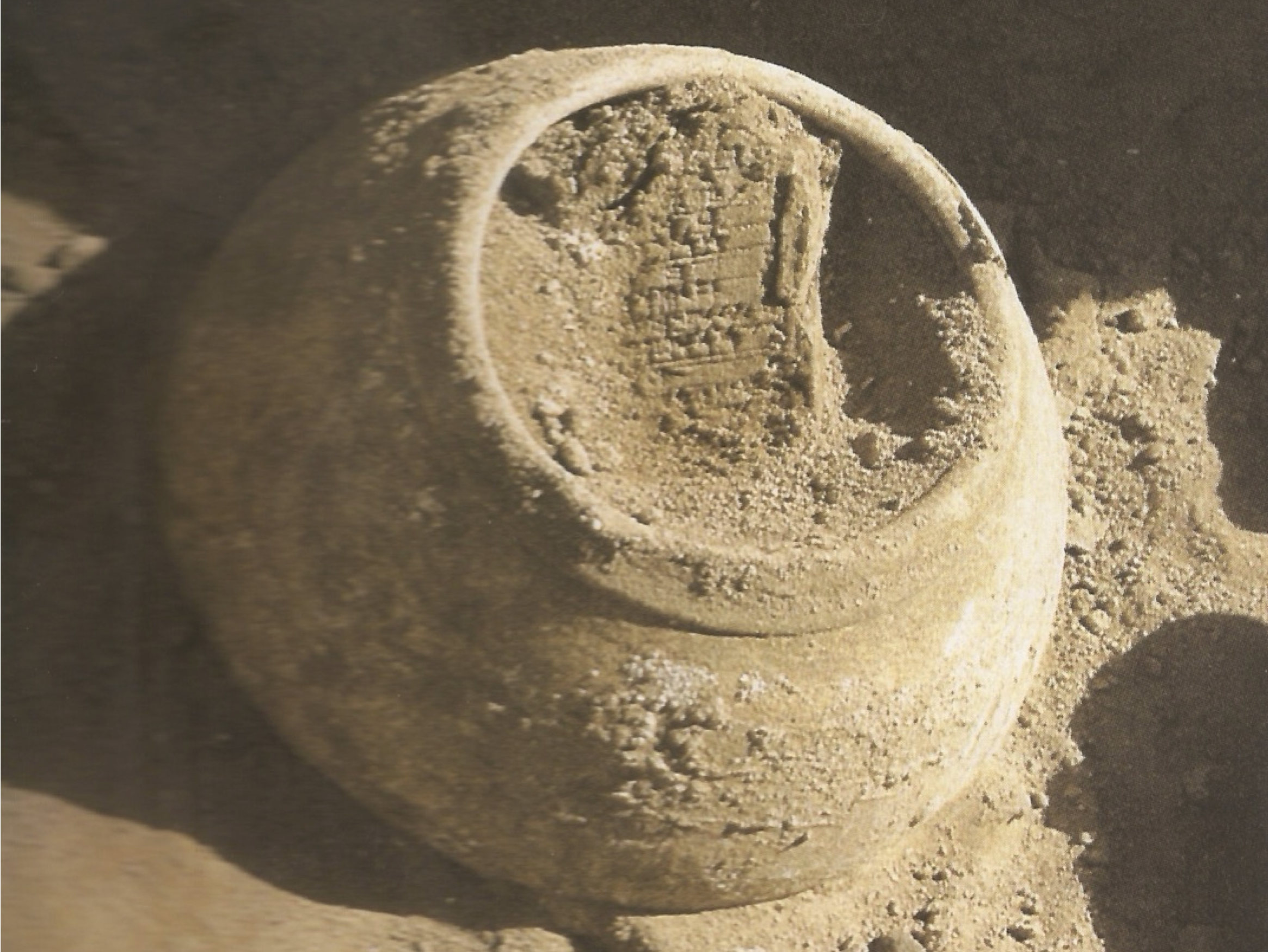
Roots of Magic Interview 13
Ulrike Steinert is, at the time of recording, in the latter stages of the project ‘Metaphors in ancient Mesopotamian incantations and magic rituals: Emotions, cultural concepts and performance’. The project has two main phases. The first is a careful tabulation of all the rich and varied emotional metaphors which occur across the whole range of known Akkadian incantation-texts (second and first millennium BCE), from erotic magic and medical practices to magical ‘couples-therapy’ and anti-witchcraft spells, resulting in a useful, searchable database of emotional metaphors. The second phase is the collation of all this data and the publication of overall results.
We begin the interview with a quick ‘elevator-pitch’ about the project, followed by some exploration of all the different types of incantation-texts under investigation. We then turn to Cognitive Metaphor Theory and what it is when at home; this is a cognitive-linguistic model expounded famously by Lakoff and Johnson, but used by many scholars, with great promise for doing responsible comparative work. We then dig into her results, the potentials there for future research and collaborative, cross-cultural work, and more.
 Interview Bio:
Ulrike Steinert is a Privatdocent at the University of Mainz in the Department of Ancient Near Eastern Studies. She acquired her PhD in Ancient Near Eastern Studies at the University of Göttingen in 2007. Her PhD dissertation, in which she investigates concepts of personhood and the human being in ancient Mesopotamian cuneiform texts from the second and first millennium BCE, was published as Aspekte des Menschseins im alten Mesopotamien (Brill, 2012). Among many projects, she has worked as a postdoc in the ERC-funded project “BabMed – Babylonian Medicine” (2013-2018) at the Freie Universität Berlin and in the Research Training Group 1876 “Early Concepts of Humans and Nature” at the University of Mainz (2018-2022). In 2022-2026, she was Principal Investigator of the DFG-project “Akkadian and Hittite Emotional Concepts in Context (AHEC)” at Mainz University, in which she studied the domain of emotions in the Akkadian language. Her research focuses on the interlinked fields of ancient Mesopotamian anthropology, the history of ancient science and knowledge, especially Mesopotamian healing traditions, and on historical and linguistic emotion research. Her monograph Women’s Healthcare in Ancient Mesopotamia in the First Millennium BCE (de Gruyter, 2026) offers editions of a corpus of more than 100 magico-medical cuneiform texts, including explorations of concepts of the female body, of problems related to women’s reproductive health and their therapies spanning the realms of medicine, magic and religion. Ulrike is the editor of Assyrian and Babylonian Scholarly Text Catalogues: Medicine, Magic and Divination (de Gruyter, 2018), and Systems of Classification in Premodern Medical Cultures: Sickness, Health and Local Epistemologies (Routledge, 2020). She is co-editor of The Routledge Handbook of Emotions in the Ancient Near East (Routledge, 2023, with Karen Sonik) and Living Bodies, Dead Bodies and the Cosmos: Culturally Specific and Universal Concepts (Mohr Siebeck, 2024, with Chiara Ferella and Tanja Pommerening).
Works Cited in this Episode:
James George Frazer. The Golden Bough: A Study in Magic and Religion. Macmillan & Co., New York, NY/London, 2nd edition, 1900.
George Lakoff and Mark Johnson. Metaphors We Live By. University of Chicago Press, Chicago, IL, 1980.
Lévy-Bruhl, Lucien. Les fonctions mentales dans les sociétés inférieures. Felix Alcan, Paris, 1910.
Edward B. Tylor. Primitive Culture. Murray, London, 1871.
Recommended Reading:
Recommended Reading for RoM 13 with Ulrike Steinert

Comments
Comments are open to SHWEP members only
Join now to comment
Already a member? Log in here