Oddcast episode
April 24, 2026
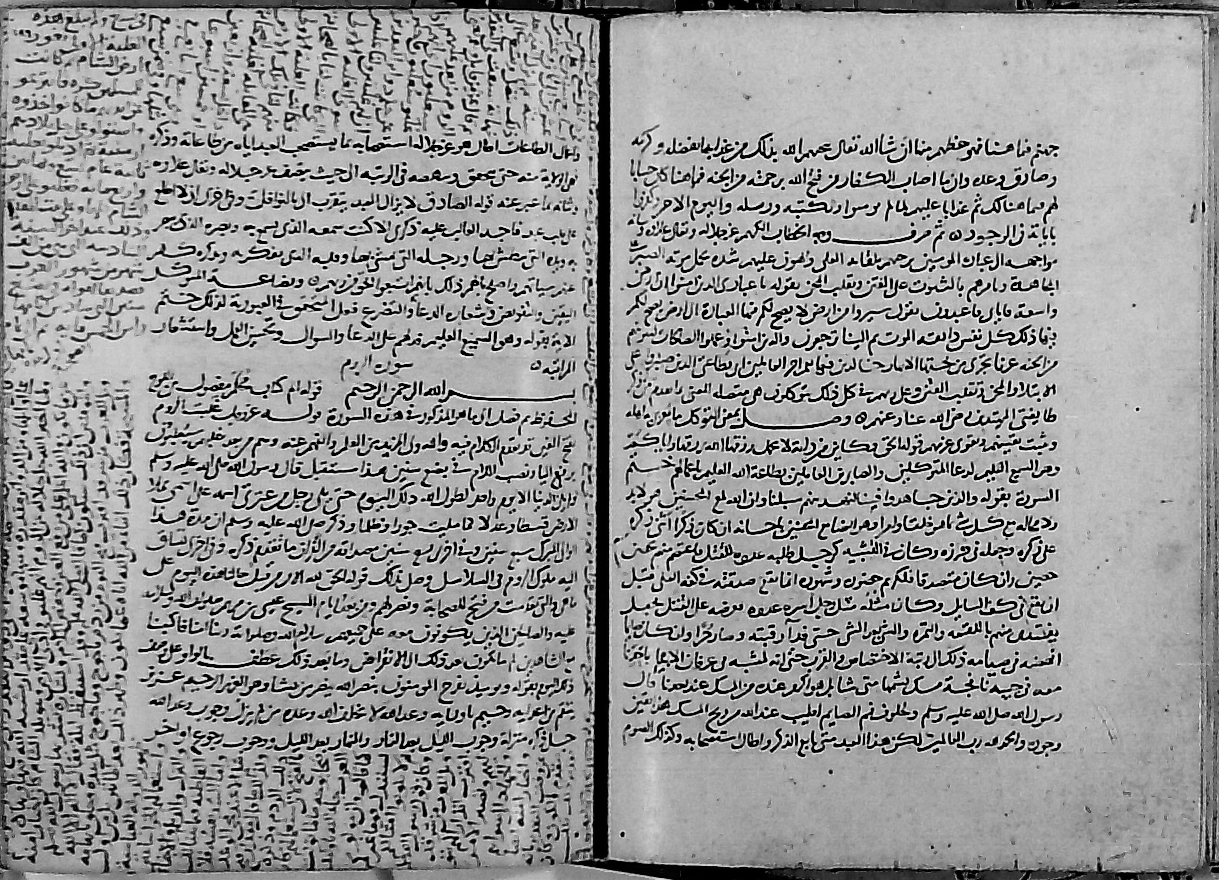
Crossing Over to the Unseen: Yousef Casewit on Ibn Barrajān
[A SHWEP field recording]
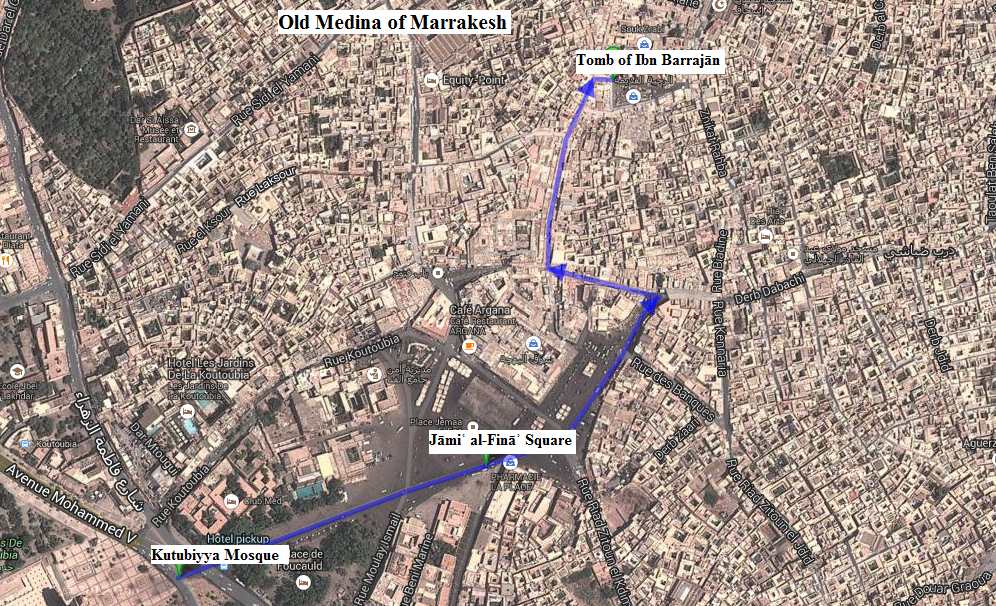
We are delighted to speak with Yousef Casewit of the University of Chicago on the life, times, and thought of Abū al-Ḥakam ʿAbd al-Salām ibn ʿAbd al-Rahmān ibn Abī al-Rijāl Muḥammad ibn ʿAbd al-Rahmān al-Lakhmī al-Ifrīqī al-Ishbīlī, better-known as Ibn Barrajān of Seville (d. 536/1141). Ibn Barrajān was a twelfth-century Andalusian ‘mystic’ – a renunciant philosopher concerned with penetrating the unseen foundations of reality through a Qur’ānic hermeneutic applied to the world itself – whose writings and reputation would go on to influence much later Sufism, particularly via the medium of the great Andalusian sufi Ibn al-‘Arabī. But the spiritual path in Ibn Barrajān’s day and time was a much more free-form and improvisational undertaking than among the later sufis. Casewit argues for a particular stream of esoteric speculation and practice typical of al-Andalus, and also identifies several original contributions from Ibn Barrajān within that Andalusian context.
We discuss:
- The basic life and times of Ibn Barrajān – where and when he lived, what was going on politically, and especially what was going on religio-politically,
- His three extant works – two of Qur’ānic commentary and one on the Divine Names – and of the esoteric moves he makes within them, including:
- The positing of a sub-creating or demiurgic entity known as the ‘Abd al-kullī (the ‘Servant of All’), containing all the essences which are unfolded as particulars in the world,
- And an elusive spiritual practice, the i‘tibar, ‘crossing over’, a form of contemplation which might lead to insights into the divine nature latent in the creation, or might perhaps make higher claims to a more, shall we say ontological transformation of the human aspirant toward apprehension of god’s nature,
- Ibn Barrajān’s relationship to the larger movement known as ‘sufism’, to his particular Andalusi sufi milieu, and his originality within both of those larger contexts,
- And the undeniable fact that Ibn Barrajān predicted the retaking of Jerusalem by Saladin almost to the minute, and what we are to make of that.
Interview Bio:
Yousef Casewit is a Qur’anic studies scholar. His research interests include intellectual history of North Africa and al-Andalus, Muslim perceptions of the Bible, and medieval commentaries on the ninety-nine divine names.
He has several publications, including The Mystics of al-Andalus: Ibn Barrajān and Islamic Thought in the Twelfth Century (Cambridge University Press, 2017), a study on Ibn Barrajān’s life and teachings. He is also the author of a critical edition of a Qur’an commentary by Ibn Barrajān (Brill, TSQ Series, 2016). His latest publication is The Divine Names: A Mystical Theology of the Names of God in the Qur’an, a translation and critical edition of a Sufi-Philosophical commentary on the divine names by the Algerian scholar ‘Afif al-Din al-Tilimsani (d. 1291) for the Library of Arabic Literature, NYU Press.
Works Cited in this Episode:
Primary:
Ibn Barrajān: ‘The heart is alive and the pen is dead, and the shortest path that I know to unveiling is to train the soul …’. etc. is a citation from Ibn Barrajan’s commentary on the divine names, Sharh al-asma’, ed. Mazyadi, I, 101, trans. Casewit.
Secondary:
Yousef Casewit. The Mystics of al-Andalus. Ibn Barrajān and Islamic Thought in the Twelfth Century. The University Press, Cambridge, 2017.
Ignáz Goldziher. Ibn Barraǧān. ZDMG, 69:544–46, 1914.
Recommended Reading:
Yousef Casewit on Ibn Barrajan Recommended Reading
Themes
Abū Ḥāmid al-Ghazālī, Esoteric Hermeneutics, Ibn Barrajān, Ibn Masarra, Ibn ʿArabī, Ikhwān Al-Ṣafā, Interview, Lettrism, Qur'ān, Spiritual Exercises, Tasawwuf, ʿIlm al-Ḥurūf

Kenneth Meisner
May 30, 2026
Just a simple “thank you!” I particularly enjoy these looks into the Islamic cultures of “the West”.
Earl Fontainelle
June 1, 2026
You’re very welcome, Kenneth. I enjoy them too.