Members-only podcast episode
Storytime: Reading the Hermetic Kyranides, Part II
This is a special podcast episode for SHWEP members only
Already a member? Log in here to view this episode
[Corrigendum: In the episode I say `Arcturus’ when I actually mean Ursa Major, the constellation known as the Bear in antiquity, maybe the Big Dipper to you.]
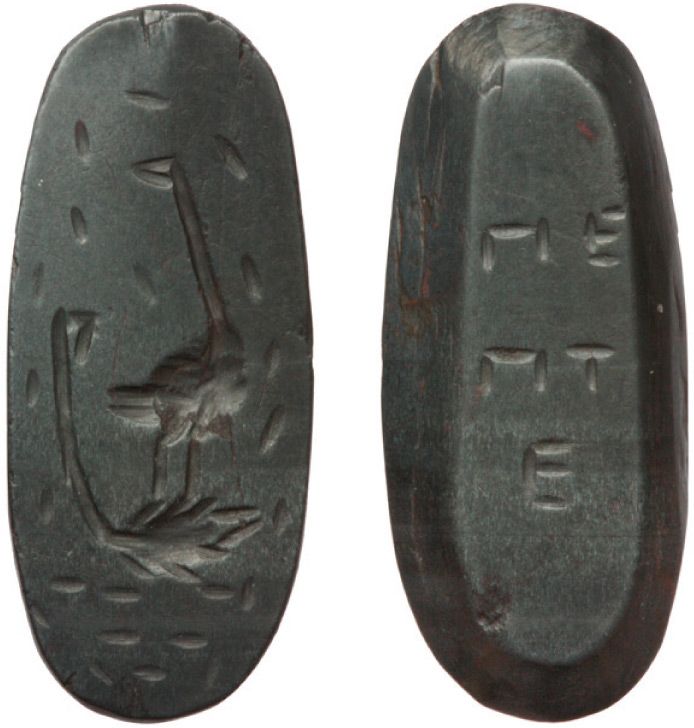
We explore section Η (ēta) of Book I of the Kyranides. Unknown plants turn into scorpions, phoenixes might be flamingoes (or vice versa), the soul is shewn definitely to be immortal and mantic, and hoopoe-hearts are eaten.
Works Cited in this Episode:
The Campbell-Bonner Magical Gems Database rocks the house.
Primary:
Pliny on the stones called ‘firestone’ (pyritēs): H.N. 36, 137–138. On hephaistitis: ibid. 166.
Hermes to Asclepios, the Book Called ‘Sacred’: find it in pp. 140–143 of André-Jean Festugière. La révélation d’Hermes Trismegiste. J. Gabalda, Paris, 1944-1954. 4 vols, or pp. 156–159 in the new edition of 2014.
Corpus Hermeticum XI, 19: ἀλλ’ οὐδὲ αὐτῇ οὐδὲν ἐμπόδιον, οὐ τοῦ ἡλίου πῦρ, οὐχ ὁ αἰθήρ, οὐχ ἡ δίνη, οὐχὶ τὰ τῶν ἄλλων ἀστέρων σώματα· πάντα δὲ διατεμοῦσα ἀναπτήσεται μέχρι τοῦ ἐσχάτου σώματος. εἰ δὲ βουληθείης καὶ αὐτὸ ὅλον διαρρήξασθαι καὶ τὰ ἐκτός (εἴ γέ τι ἐκτὸς τοῦ κόσμου) θεάσασθαι, ἔξεστί σοι.
Secondary:
David Bain. ΜΕΛΑΝΙΤΙΣ ΓΗ in the Cyranides and Related Texts: New Evidence for the Origins and Etymology of Alchemy? In Todd Klutz, editor, Magic in the Biblical World: From the Rod of Aaron to the Ring of Solomon, number 245 in Journal of the Study of the New Testament Supplement Series, pages 191–218. T & T Clark, London/New York, NY, 2003, quoting p. 205.
Hans Dieter Betz. The Greek Magical Papyri in Translation, Including the Demotic Spells, volume 1. University of Chicago Press, Chicago, IL, 1996.
D’Arcy Thompson. A Glossary of Greek Birds. Oxford University Press, Oxford, 1895.
Maryse Waegeman. Amulet and Alphabet: Magical Amulets in the First Book of Cyranides. J. C. Gieben, Amsterdam, 1987.
Martin L. West. Magnus and Marcellinus: Unnoticed Acrostics in the Cyranides. Classical Quarterley, New Series, 32:480–81, 1982.

Eemil Matias Pohjalainen
June 11, 2026
Hi Earl, thank you for the shout-out in the part I of the storytime. As someone who isn’t exactly familiar with the Kyranides I’ve been really appreciative of the series. In the previous episode you mentioned how one of the reasons why the weird Kyranos(?) mention in Proclus is suspect is because our text is more amulet and occult virtues of stones and plants focused than astrological in nature, but the poetic astrological passage discussed in this episode sounds to me like something that would be extremely fitting for Proclus’ discussion of the astral workings in the Myth of Er.
In addition, you mention in the previous episode how Proclus is citing the Kyranos(?) source, but (correct me if I’m wrong) I don’t think he’s exactly citing anyone but saying that among the prevalent theories regarding the relation between the fate of souls and astral influences he has found one such theory ascribed to Kyranos(?) (and another one ascribed to another source).
I used to find it weird how Proclus could connect Kyranos(?) to astral teachings, but like I mentioned above now the connection doesn’t seem as weird to me anymore and I think the scholiast’s editorial decision might even gain credence. The contents of that astrological poem just fit way too well into what Proclus is talking about.
As for the pronunciation of my surname, you did well enough (Poh [emphasis on the H] – ya – lainen).
Donald Korycansky
June 13, 2026
You mention Arcturus; the line about the “seven-pathed bears” makes me think of the seven stars of the Big Dipper, which of course is part of the constellation of Ursa Major.
Earl Fontainelle
June 19, 2026
Donald,
Quite right; thanks for the correction! The reference is indeed to Ursa Major. The name Arcturus, a Latinisation of the Greek αρκτος meaning `bear’ led me to speak inaccurately.
Donald Korycansky
June 20, 2026
Oh, I was not trying to correct a mistake (if there was one), only add my thought to the discussion. Indeed, the name Arcturus apparently means “Guardian of the Bear” (ἄρκτος + οὖρος), and is located not far from Ursa Major in the sky. You can draw a line from the handle of the Dipper to that star — “follow the arc to Arcturus” (as the jingle has it), with the next line “and the spike to Spica”, i.e. continuing on to end at the bright star in the constellation Virgo.
Silvius Fabricius
August 24, 2026
Quick note on ~23:30 in- wouldn’t ΜΑΓΓΟΣ ΜΑΡΚΕΛΛΙΝΩ easily be interpreted as “Magnus, to Marcellinus”?
Earl Fontainelle
August 25, 2026
It could be, if it were consistently that spelling, but it isn’t! Sometimes the end of the ΜΑΡΚΕΛΛΙΝ- is missing, and as I recall at least once we have an -ΟΣ ending. The text of the Kyranides isn’t just corrupt, it’s gold-standard corrupt. Hopefully the new edition will address the acrostics and shed some light on this matter; they are clearly there, but what kind of clues they might give as to authorship or addressee are very unclear, to me at least.
In case it isn’t clear in the episode, the final -Ω in the lines we look at isn’t there in the MSS; it’s West’s reconstruction, based on metrics and on trying to make sense of the poem. You need a long vowel there, so -Ω is the one to go with. Another question which then arises (for which I am not a qualified specialist) would be “How much license did acrostic poets allow themselves to make their acrostics match the sense they were trying to convey?” Maybe they would just happily put the second word into a weird dative that didn’t really make grammatical sense ….