Podcast episode
April 1, 2026
Episode 216: Gerasimos Merianos on East Roman Alchemy in Late Antiquity and Beyond, Part II
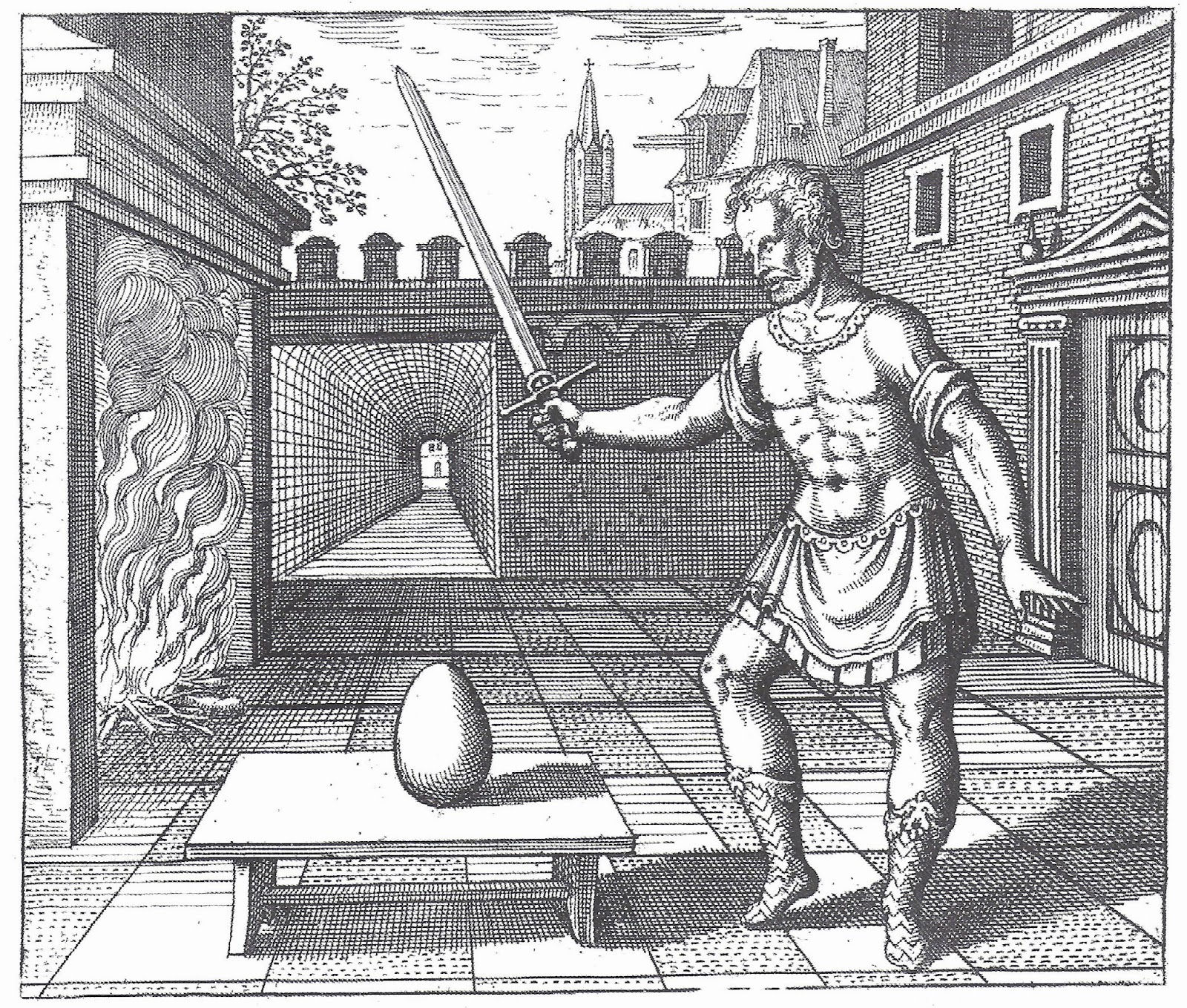
Part II begins with a trip to the laboratory, as Merianos describes the making of the Divine Water as laid out in the famous Leiden Papyrus. This leads to a discussion of the alchemist Christianos’ search for an alchemical method, as well as a hermeneutic for reading the ancient authorities, based in a ‘mathematicization’ or ‘quantification’ of alchemy. The case-study is Christianos’ discussion of the distillation of that quadruplex entity known as the egg. Indeed, this mathematicization is not merely the introduction of a finitude to the number of possible alchemical procedures (as in Christianos), although it is that; it is a whole new approach which seeks to integrate the Quadrivium more generally with the science of alchemy (as we see in the Anonymous Philosopher, who brings music-theory to bear on alchemy), foreshadowing many very important scientific developments of later eras.
We also discuss the new approaches to alchemical secrecy – or perhaps esotericism, in the context of alchemy as a sacred art dealing with divine secrets – which the East Roman alchemists begin to develop; alchemy, now, can be presented as the ‘self-hiding secret’. It is not up to the authors to conceal their practices; it is simply impossible for the unworthy to penetrate the veil of divine protection around the secrets of the Art.
Finally, we discuss the cozener or mountebank as a figure in East Roman alchemy: the first appearance (outside of alchemical literature proper) of the Χυμευτής, ‘Chymist’ occurs in the sixth-century chronicle of John Malalas, and this first-attested alchemist is also an ἐπιθετής, an ‘impostor’. We then go forward in time to the eleventh century, where Michæl Psellos was involved in some very interesting dealings in what could be described as ‘alchemical politics’.
 Interview Bio:
Gerasimos Merianos is Senior Researcher in Byzantine History and the History of Byzantine Science at the Institute of Historical Research (IHR) of the National Hellenic Research Foundation in Athens. He coordinates the research project Alchemy in Byzantium at the IHR and has published extensively on Byzantine alchemy. His work includes the forthcoming edited volume Alchemy in Byzantium (De Gruyter, 2026), the first collection dedicated exclusively to the ‘sacred art’ in the Byzantine world. His academia page is full of wonders.
Works Cited in this Episode (in rough order-of-mention):
Our interview with Martin Stadler on the Egyptian temple at Edfu (and matters economical relevant to the Egyptian temples) can be heard here.
Ben Johnson, The Alchemist, first performed by the King’s Players in 1610. The text can be read here.
John Malalas on the mountebank Ioannes Isthmeos: Hans Thurn, editor. Ioannis Malalæ chronographia. Number 35 in Corpus Fontium Historiæ Byzantinæ, Series Berolinensis. De Gruyter, Berlin/New York, NY, 2000, p. 323. English trans. by Elizabeth Jeffreys, Michael Jeffreys, and Roger Scott, The Chronicle of John Malalas. A Translation (Byzantina Australiensia 4). Melbourne: Australian Association for Byzantine Studies, 1986, p. 222.
Michæl Psellos’ letter on gold-making can be found at Joseph Bidez, editor. Catalogue des manuscrites alchimiques grecs VI: Michel Psellus, Épître sur la Chrysopée, Opuscules et extraits sur l’alchimie, la météorologie et la démonologie. 1928, Bruxelles. pp. 26–42. Italian translation: Francesca Albini, ed. and trans. Michele Psello, La crisopoea ovvero come fabbricare l’oro. Traduzione, introduzione e commento. Nuova Atlantide, I classici del pensiero magico, esoterico e simbolico. ECIG, Genova, 1988.
Psellos’ later denouncement of Kerularios can be found at George T. Dennis, editor. Michaelis Pselli Orationes forenses et acta. Bibliotheca Scriptorum Graecorum et Romanorum Teubneriana. Teubner, Stuttgart/Leipzig, 1994., 1.2670–2733. For a French translation and commentary on the passages relating to alchemy, see Bidez, Catalogue des manuscrits alchimiques grecs, vol. VI, op. cit., pp. 76–89.
The Book of the Eparch: Johannes Koder, editor. Das Eparchenbuch Leons des Weisen, volume 33 of Corpus Fontium Historiae Byzantinae. Österreichische Akademie der Wissenschaften, Vienna, 1991. There is an English translation of the Book of the Eparch, which is easily accessible online (Edwin Hanson Freshfield, Roman Law in the Later Roman Empire: Byzantine Guilds, Professional and Commercial. Cambridge: Cambridge University Press, 1938). However, it should be used as an aid rather than as an authoritative philological basis (especially with regard to terminology). A more reliable partial translation is provided by Michael F. Hendy, Studies in the Byzantine Monetary Economy c. 300–1450. Cambridge: Cambridge University Press, 1985, pp. 251–253, particularly of the second chapter on the argyropratai (silversmiths, lit. ‘sellers of silver’, to be understood as goldsmiths and/or bankers), although it follows an earlier edition.
Christianos, Thirty Chapters on Gold-Making: On the 135 kinds of alchemical productions and the method by which Christianos derives them through combinations of egg components, within a framework of division by species and genus, see Marcellin Berthelot and Charles-Émile Ruelle (ed. and French transl.), Collection des anciens alchimistes grecs, 3 vols. Paris: G. Steinheil, 1887–1888, vol. II, pp. 410,16 – 414,10 (accessible here). A much-needed new edition of Christianos’ work is currently being prepared by Marco Bellini, based on his doctoral dissertation (L’opera alchemica del filosofo Cristiano. Edizione, traduzione e note di commento. PhD Diss. Alma Mater Studiorum – Università di Bologna, 2023).
For recommended reading, see previous episode
Themes
Alchemy, Chrysopoeia, Decknamen, East Rome, Interview, Michael Psellos

Comments
Comments are open to SHWEP members only
Join now to comment
Already a member? Log in here