Roots of Magic episode
December 17, 2025
Beatrice Baragli on the Bīt Rimki Ritual Cycle
Roots of Magic Interview 8
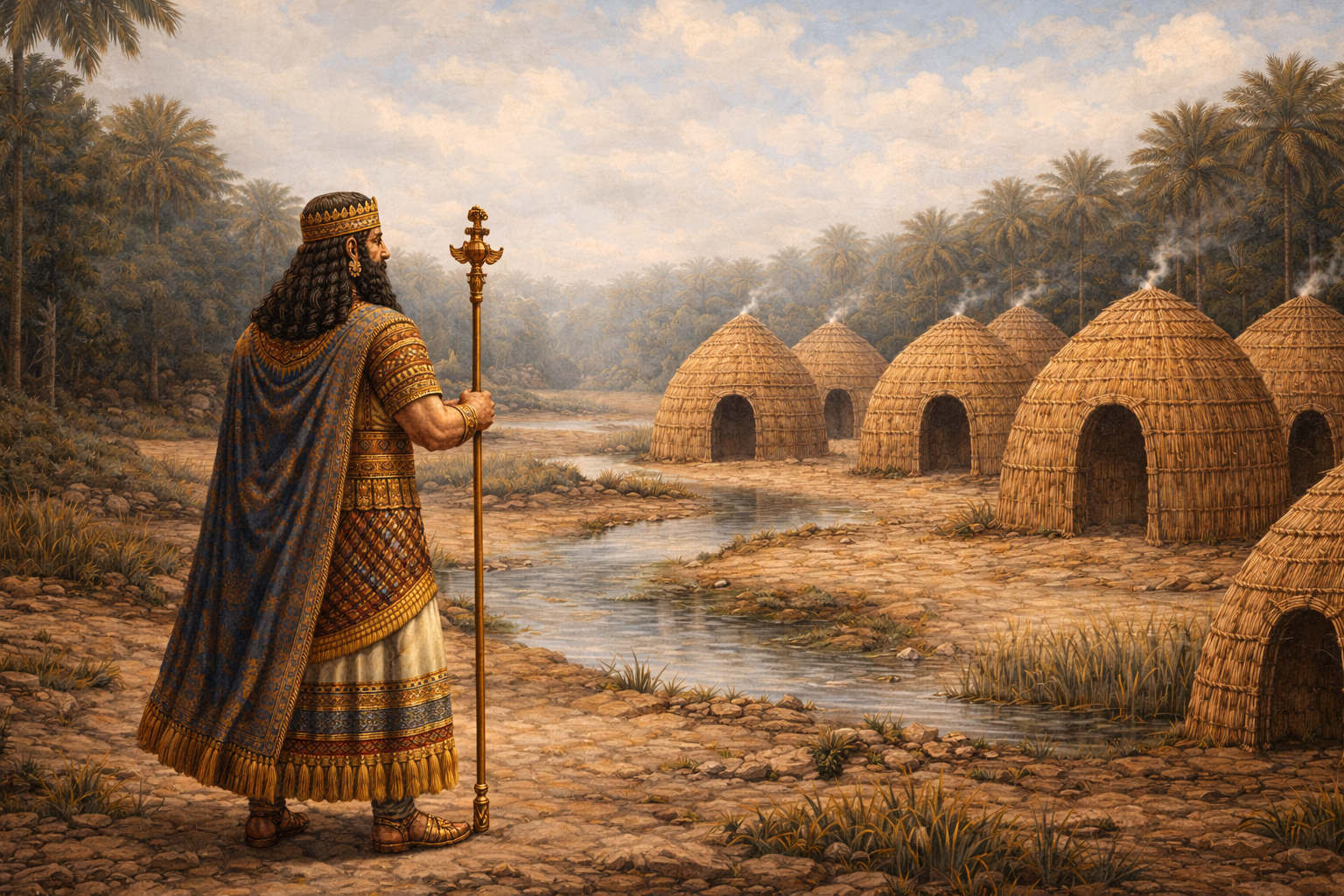
We are delighted to have been able to speak with Beatrice Baragli in the very heart of the MagEIA-project, das Mageiahaus in Würzburg (wonderful but prone to echo, as you will hear in the interview). We begin with the fascinating figure of the āšipu (whom we last met performing the Šurpu ritual in our interview with Frank Simons) – not a ‘priest’, per se, in that he doesn’t work in a temple-setting, but a highly-trained ritual specialist working at the royal palace, among other settings. In our case we are discussing the āšipu performing a different ritual sequence called Bīt Rimki (“the Bathhouse”), one aimed at purifying the person of the king. We discuss the roughly first-millennium-BCE dating of this Bīt Rimki ritual sequence, the textual forms in which we find it (divided into two corpora, instructions to be followed and texts to be recited), and a run-through of how the ritual went down. We then turn to notions of ‘magic’, ‘religion’, and ‘politics’, exploring the interstices where these modern categories fail us in grasping what rituals like Bīt Rimki meant to those performing them, or depending on their success.
We then turn to the daily life of a scholar working to create a critical edition of a text like Bīt Rimki, preserved in hundreds of mostly highly-fragmentary clay tablets.
Finally, we discuss the related themes of secrecy and the esoteric in the ancient scribal tradition of Mesopotamia.
 Interview Bio:
Beatrice Baragli is an Assyriologist whose research interests include Sumerian literature and rituals, ancient Near Eastern religions, and Sumerian-Akkadian bilingualism. She was a postdoctoral fellow at both the Hebrew University of Jerusalem and UCL Berkeley. Her doctoral thesis was a critical edition of the Sumerian Kiutu incantation-prayers to the sun god. Within the MagEIA project, she is examining the Bīt Rimki royal purification ritual. She will soon begin an ERC Starting Grant project focusing on the Sumerian language of the first millennium BCE.

Comments
Comments are open to SHWEP members only
Join now to comment
Already a member? Log in here